" height="47px" id="o2cgjfc8S" width="47px"/><g d="M 0 17 L 0 0 L 10 0 L 10 17 Z M 0 17 L 0 0 L 9.909 0 L 9.909 17 Z M 0 8.499 C 0 8.883 0.136 9.202 0.451 9.512 L 7.731 16.632 C 7.973 16.881 8.269 17 8.621 17 C 9.334 17 9.909 16.435 9.909 15.729 C 9.909 15.371 9.757 15.053 9.502 14.799 L 3.03 8.495 L 9.502 2.198 C 9.76 1.941 9.909 1.618 9.909 1.27 C 9.909 0.563 9.334 0 8.621 0 C 8.286 -0.008 7.964 0.123 7.731 0.361 L 0.451 7.486 C 0.139 7.79 0.003 8.112 0 8.499 Z" fill="transparent" height="17.00036336082374px" id="JdLx1k3Kq" transform="translate(18.5 15)" width="10px"><path d="M 0 17 L 0 0 L 10 0 L 10 17 Z" fill="transparent" height="17px" id="GckooBkqI" transform="translate(0 0)" width="10px"/><g d="M 0 17 L 0 0 L 9.909 0 L 9.909 17 Z M 0 8.499 C 0 8.883 0.136 9.202 0.451 9.512 L 7.731 16.632 C 7.973 16.881 8.269 17 8.621 17 C 9.334 17 9.909 16.435 9.909 15.729 C 9.909 15.371 9.757 15.053 9.502 14.799 L 3.03 8.495 L 9.502 2.198 C 9.76 1.941 9.909 1.618 9.909 1.27 C 9.909 0.563 9.334 0 8.621 0 C 8.286 -0.008 7.964 0.123 7.731 0.361 L 0.451 7.486 C 0.139 7.79 0.003 8.112 0 8.499 Z" fill="transparent" height="17.00036336082374px" id="ED2fb6zHu" transform="translate(0 0)" width="9.909199999999998px"><path d="M 0 17 L 0 0 L 9.909 0 L 9.909 17 Z" fill="transparent" height="17px" id="Be3laXNYj" transform="translate(0 0)" width="9.909170000000003px"/><path d="M 0 8.499 C 0 8.883 0.136 9.202 0.451 9.512 L 7.731 16.632 C 7.973 16.881 8.269 17 8.621 17 C 9.334 17 9.909 16.435 9.909 15.729 C 9.909 15.371 9.757 15.053 9.502 14.799 L 3.03 8.495 L 9.502 2.198 C 9.76 1.941 9.909 1.618 9.909 1.27 C 9.909 0.563 9.334 0 8.621 0 C 8.286 -0.008 7.964 0.123 7.731 0.361 L 0.451 7.486 C 0.139 7.79 0.003 8.112 0 8.499 Z" fill="rgb(255, 255, 255)" height="17.00036336081234px" id="SUikP3hSx" transform="translate(0 0)" width="9.909199999999998px"/></g></g></g></svg>)
Spade AI
Main Role
UX Researcher
Duration
4 Months
Project Type
Startup: B2B
Jan. 2024
Project Overview
Spade AI is a B2B research platform that helps product, marketing, and sales teams find and analyze credible market research data. This case study focuses on usability testing and research conducted to evaluate and refine Spade AI’s conversational UX/UI copilot.


Background
Spade AI initially positioned itself around thought leadership and content generation. As the product evolved, user confusion around topics, intent, and workflow signaled a need to reassess the platform’s direction. This research project supported a broader product pivot toward research-driven marketing and insights, alongside a rebrand.es


Research Objective
The goal of this research was to evaluate:
Effectiveness and clarity of the conversational research experience
User understanding of topics and content generation
Efficiency of navigation and task completion
Overall user satisfaction and trust in the system
Insights were used to improve usability, information retrieval accuracy, and interaction flow.
Methods
Usability Testing & Interviews (2 Rounds)
Moderated Zoom usability sessions
Internal network recruitment
Total participants: 4
Task-based testing
Follow-up interviews and debriefs
Initial Testing
The first round of testing evaluated the early product direction when Spade AI was focused on thought leadership.
Participants were asked to:
Explore the homepage freely
Describe what they believed the product was intended to do
Navigate the conversational UI
Search for topics
Review content cards
Generate sample content from start to finish
Background Questions
Are you responsible for developing thought leadership content?
How do you decide what content to create?
What tools do you use for research?
Where do you distribute content?
Core Task
Explore the interface
Identify the purpose of the conversational UI
Walk through topic discovery
Review content cards
Generate content using the full flow
Debrief & Closing
Participants rated ease of use, discussed friction points, and reflected on clarity, speed, and consistency.
Reflection
This project strengthened my experience in:
Conversational AI research
Moderated usability testing
Research synthesis and insight generation
Translating findings into product recommendations
Spade AI demonstrates how research can directly influence product strategy, UX direction, and business positioning.

Impact
Users wanted clearer guidance when initiating conversations
This research:
Informed a major product pivot
Identified critical usability gaps in conversational UX
Helped align product direction with real user needs
Provided actionable guidance for redesign and rebranding
Platform & Data
Are you responsible for developing thought leadership content?
How do you decide what content to create?
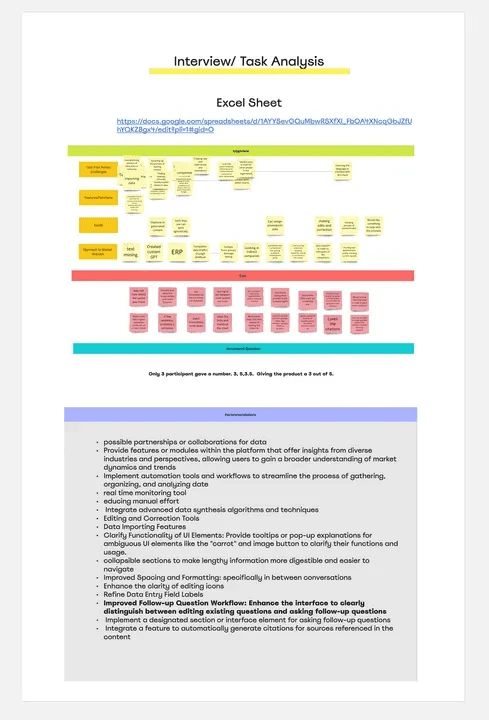
What tools do you Introduce partnerships to surface cross-industry insights
Implement automation for data collection, organization, and analysis
Enable real-time monitoring and reduce manual effort
Integrate advanced data synthesis algorithmsuse for research?
Where do you distribute content?
UX & UI Improvements
Add editing and correction tools
Enable data importing
Improve clarity of UI elements with tooltips
Use collapsible sections for dense information
Improve spacing and formatting between conversations
Enhance visibility and labeling of editing icons
Conversational Workflow
Clearly distinguish between editing questions and asking follow-ups
Introduce a dedicated follow-up question interface
Automatically generate citations from referenced sources
Recommendations
Based on research findings, the following recommendations were proposed:


Key Insights
Users wanted clearer guidance when initiating conversations
Editing and correcting queries felt unintuitive
Topic discovery required stronger scaffolding
Users valued customization of tone and style
Homepage needed stronger value signaling through metrics or exampless.

User Interviews & Testing — Round 2
The second round of testing focused on validating clearer workflows and understanding how users interact with the conversational research feature.
Key Findings (Round 1)
Testing revealed significant usability challenges:
Confusion around the concept of “topics” and how to use them
Unclear value proposition on the homepage
Difficulty understanding how to move from research to content creation
Navigation and workflow inconsistencies
Despite friction, users recognized strong potential in the product’s ability to retrieve information and generate content for social media and thought leadership.
Product Pivot
Based on early insights, the product shifted from a thought leadership focus toward research marketing. This shift required:
Reframing product messaging
Rebranding the platform
Re-evaluating the conversational workflow


Testing Analysis and Transcription